Rosa Vogel · 16 November 2026
How Custom Workflow Integrations Influence Productivity Metrics in Shared Note Environments
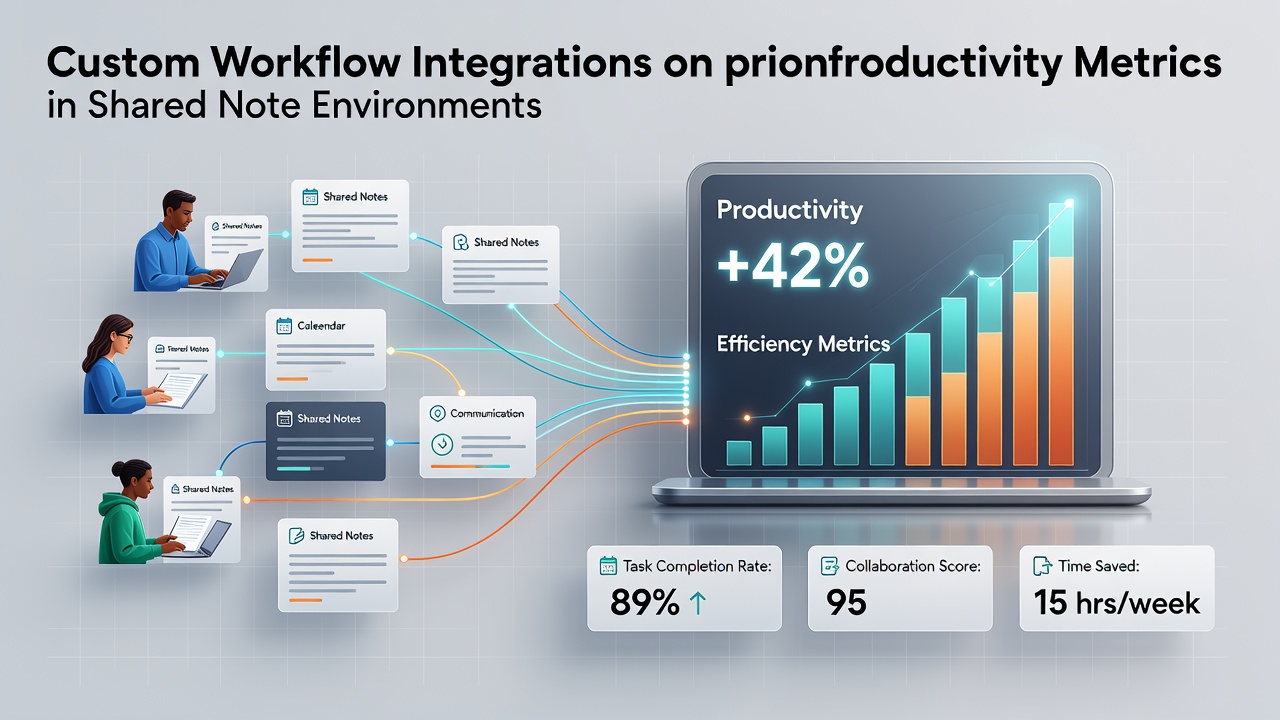
Custom workflow integrations connect shared note platforms with external applications and services, allowing teams to automate data transfers, trigger actions, and synchronize updates across multiple systems without manual intervention, and observers note that these connections often lead to measurable changes in how productivity gets tracked and reported. Research indicates that organizations implementing such integrations see shifts in key metrics including task completion rates, time allocation per project, and error frequencies in collaborative documentation.
Defining Workflow Integrations in Collaborative Note Systems
Shared note environments such as multi-user platforms enable simultaneous editing and real-time updates, while custom integrations extend these capabilities by linking notes to project management software, calendars, databases, and communication channels through APIs and middleware tools, and data from industry reports shows that this linkage reduces duplication of effort. Teams that set up automated triggers for task assignments or status changes find that information flows more directly between note entries and downstream processes, which in turn affects how completion times get calculated.
Effects on Time-Based Productivity Measures
Time tracking data reveals that custom integrations can decrease the average duration spent on administrative updates in shared notes, since information entered once propagates automatically to connected systems, and studies from the Australian Bureau of Statistics on workplace digital adoption highlight corresponding gains in effective working hours across knowledge teams. Yet reductions in context-switching also appear in logs, as users spend less time copying content between applications, and this pattern holds across sectors where November 2026 updates to integration platforms introduced improved synchronization speeds.
Those who monitor daily activity metrics report that integration setups correlate with higher percentages of time allocated to core analytical work rather than formatting or transfer tasks, although the exact magnitude varies depending on the complexity of the workflows being automated.
Changes in Accuracy and Error-Related Metrics

Error rates in shared documentation drop when integrations enforce consistent data formats and validation rules at the point of entry, according to findings published by researchers at the University of Toronto on collaborative digital tools, and this improvement directly influences quality scores used to evaluate team output. Version conflicts decline as well when automated sync rules replace manual merging, leading to fewer rollback events in audit trails.
Figures from European Commission digital economy reports indicate that organizations with mature integration layers experience fewer instances of outdated information persisting across note repositories, which in turn supports steadier progress toward project milestones without repeated corrections.
Impact on Collaboration Volume and Engagement Indicators
Engagement metrics such as the number of active contributors per note and the frequency of updates show increases following integration rollouts, because connected systems surface relevant notes within existing workflows rather than requiring separate access, and this effect appears in usage statistics gathered by Statistics Canada on enterprise software deployment. Participation spreads more evenly across team members when automated notifications pull individuals into discussions at the right moments.
Yet volume alone does not capture the full picture, since deeper analysis of contribution patterns reveals that integrations can concentrate edits among fewer users who manage the connected processes, while others focus on review and approval steps.
Measurement Challenges and Data Interpretation
Productivity metrics become harder to isolate once custom integrations span multiple platforms, because attribution of time savings or quality gains requires careful mapping of data flows across systems, and analysts emphasize the need for baseline measurements taken before integration deployment. Cross-platform reporting tools help address this by aggregating logs from notes, task systems, and communication channels into unified dashboards.
Conclusion
Custom workflow integrations alter productivity metrics in shared note environments through automation of repetitive actions, enforcement of data consistency, adn tighter connections between documentation and operational systems, and available evidence from government statistical agencies demonstrates consistent directional shifts in time, accuracy, and engagement indicators. Continued monitoring as platforms evolve will clarify the scale of these effects across different organizational contexts.